

I love pancakes, but I don’t like pancaking! In the world of ostomies, pancaking can be a frustrating, challenging and sometimes a messy ordeal. Pancaking applies mostly to colostomates, although some ileostomates with thick stool might experience this too.
Table of Contents
Video

By playing the above video you agree to YouTube's Terms and Conditions and Privacy Policy
First, a quick definition:
“Pancaking” is a word that an ostomate might use to describe when their stoma output stays on the top part of the pouch and/or collects around the stoma.
Without anyplace for the stool to go (stubborn stool!), it often forces its way under the wafer or muscles through to push the pouch off. Obviously, nobody wants to deal with leaks in this way, so it’s important to identify the cause and correct the problem.
I’m my experience with thick ileostomy output, pancaking has only caused leaks when it happens overnight; when it happens during the day, I can usually intervene before things go south.
Here are a few possible causes and some things to try:
Thick Stool
There are a few ways of dealing with thick stool; I wrote an entire article about it HERE, but these tips are specific to help prevent pancaking.
Lubricate the inside of your pouch. This can be done using a lubricating gel or liquid designed specifically for ostomy pouches, or using DIY methods like olive oil or cooking spray. The idea is to coat the inside of your pouch so that stool can slide down to a happy place at the bottom of your pouch. Lubricants need to be reapplied whenever the pouch is emptied, but it’s important that you Lubricate up to the top of the pouch (if possible).

Drink more liquids. Adding more water or other fluids to your diet will help to soften stool. Some people might try beverages known to loosen output like prune, apple or grape juice; other options like coffee or even soda could create the same effect too.
Increase fiber intake, but focus on insoluble fiber. This shouldn’t be a problem if you’re eating a lot of plant foods, but increasing insoluble fiber will move things along and can prevent stool from becoming dry, hard and difficult to pass. You’d typically want to focus on whole grains, vegetables and produce with skins. Use caution with high-fiber intake if you’re fresh out of surgery.

Some ostomates are told to take laxatives by their doctor. I would personally avoid this option as laxatives can create other problems down the road. Check with your stoma nurse or doctor if you feel that laxatives are needed.
Check Your Filter
Believe it or not, some pouch filers work too well, and they remove air from the bag while creating a vacuum at the same time. If this is the case for you, cover the outer filter on your pouch using a sticker (they often come included with your pouches). Some brands, like Hollister, don’t include these stickers, so you’ll have to improvise and use tape or something similar.

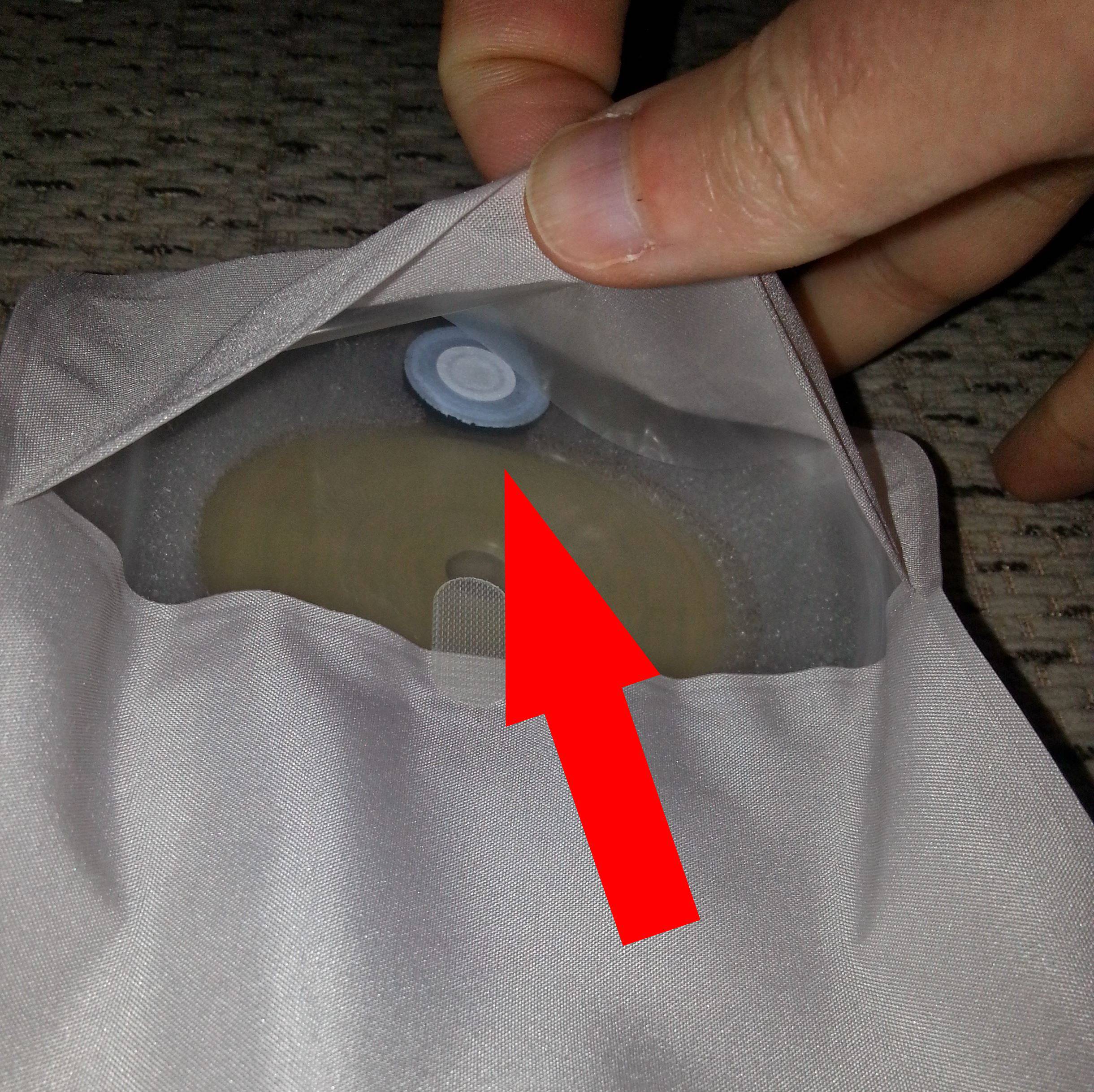
If it turns out that your filter is being too aggressive, keep using the sticker, and periodically remove it when your pouch begins to fill with gas. If this is too much trouble, you might want to try other pouch systems to see if another style of filter weekends l works better.
You can also try blowing a bit of air into the pouch when you empty or change it; this bit of air will counter the vacuum effect and will help regardless if your pouch has a filter on it or not.
Stuff It!
I’ve heard of some ostomates putting a bit of wet tissue/toilet paper inside their pouch to prevent the pouch from being too flat. This method is similar to blowing air in your pouch, although it may not prevent the vacuum effect caused by a filter. The downside is that it’s more inconvenient to use this method.
Let’s Get Physical!
Sometimes you have to manually move pancaked stool down in order to avoid problems from developing. Don’t be afraid to push, shove and squeeze that stool down to the bottom of your pouch. This may be necessary if you’re wearing an ostomy wrap or tight-fitting clothes.
Additional Tips
- If you’re covering your filter, uncover it at night so you don’t have problems with ballooning (when your pouch is too full of gas).
- Rinse the inside of your pouch before changing it, as it’ll help remove any stool that might be stuck around your stoma.
- Rinsing can also help to empty your pouch during regular toilet visits.
- Some oil lubricants may reduce your wear time, so use a commercial ostomy lubricant to minimize that risk.
- Experiment with different ostomy systems to see if another brand or style reduces pancaking for you. This may be necessary if the filter on your current pouch is too troublesome.
Question: What do you do to prevent or deal with pancaking?


Thanks for this article. i am learning lots on this site. I am a new ostomate with an ileostomy. I am a bit confused about something in this video. In the olio net I was given by the dietician at the hospital i was told that insoluble fiber is bad. In fact I was told that any food containing over 2 grams of fiber was bad. ‘what is the reality? I love veggies and salad but now believe I can’t likely ever eat salad/raw veg again?
Michael
Short answer : They are wrong
Long answer : It depends on the context. They likely said to limit insoluble fiber because it increases the risk of blockages. However this recommendation should only be temporary (usually the first 6 weeks) and it’s consumption should be encouraged after that due to the numerous health benefits of the fiber itself and the foods it’s found in.
I would clarify it with them to see why they made this recommendation.
This is why I dislike blanket warnings against eating fruits and vegetables with an ostomy; it leads to fear and confusion, and really is unnecessary for most ostomates
Dan,with the first signs of pancaking, add very warm water to your bag, maybe 1 table spoon at first, and swish it around. water shouldn’t be hot to the touch. this helps thin and also lubricate the inside of the bag. contends should sink to bottom.As far as having rabbit turds that drop to the bottom, I’ve had that on rare occasions, doesn’t seem right for a human though. mash potatoes will thin down my output. so will bean burritos. I’ve been pushing output down for years. I prefer thicker to thinnner.sounds like you do need some exercises for your abdomen, a good discussion to have with a psychical therapist and surgeon together at same time.
Thank you Linda, I am on diabetes medication called “metformin" which is known to give loose stool, I wish it was loose, then it will not pancake.I have a call to my Doctor, and will ask her if I can cut that medication for a day or two, and see what it does. So far I am eating salad, and chicken, and drink a lot, I even set myself a timer to remind me to drink. I tried pushing the lubricating deodorant up the bag, but that caused a leak from the bottom of the bag while I sleep.Will wait to see what the Doctor says.Thanks again
Hi danbh,I addition to the things that the others have suggested to help with pancaking I would just add a couple of thoughts.I used to have a lot of trouble with pancaking …also just at night. It is under control now, but I eliminated all the foods like nuts, crackers,dry kale ( better than one might think!) after 2PM. Basically any dry moisture absorbing or gritty type food.I eat very little after lunch. Hard, but you get used to it. Keep drinking liquids or just eat sparsely of things with not much fiber ( low residue) foods.Also, throughout the night, when I am just checking for gas etc, I push down any output that has collected on top of my stoma. Just use your fingers and shove it. Basically that just moves all of the material that will pancake. Once it is the bottom of the bag, it will be fine. Try those things for a few days and see if it helps. Good luck. Let us know how you are doing.
Oh yes…I know this sound ridiculous, but I swish my food and fluids together in my tummy. It helps distribute the fluids better. Just keep your bottom more still then your chest and shoulders and and go quickly from left to right. I can hear mine when it swishes well. Lol. Seriously! I do this all the time.