

I had previously written about dealing with thick ostomy output, but many ileostomates have the opposite problem: liquid output. In this post, I’d like to go over a few tips that you can use to thicken up your output. These tips apply to colostomates who have loose stools but are directed more towards ileostomates.
Table of Contents
Video

By playing the above video you agree to YouTube's Terms and Conditions and Privacy Policy
Why Worry About Liquid Or Loose Output?
For the most part, there’s nothing really wrong with having liquid or loose output, but it does come with a few challenges:
- liquid output is more likely to cause leaks.
- liquid output can shorten the life of your wafer by speeding up erosion.
- liquid output can clog pouch filters and/or leak through them.
- emptying a pouch full of liquid can be messy (especially if you have mobility issues).
- liquid output could lead to dehydration more easily.
- a high-output stoma could mean that nutrients don’t have time to be properly absorbed.
- you may need to empty your pouch more often than you’d like.
Causes of Liquid Ostomy Output
Ostomates with Short Bowel Syndrome are more prone to having liquid output with fast transit of their food through their small intestine, but there are other reasons which can cause it too.
Here are a few of the more common causes:
Dietary
The following foods and beverages can cause a dramatic change in your output’s consistency. You’ll likely be able to identify the culprit within hours of consuming them:
- Coffee or tea
- Sport drinks
- Soda/Pop/Soft drinks (both diet and regular )
- Fruit juices
- Chocolate
- Certain fruits (for me, it’s cherries)
- Artificial sweeteners
- Alcoholic beverages (especially wine)
- Fried foods
- Hot/spicy foods
- Non-vegan foods like dairy (or other lactose-containing food, if lactose intolerant)
For the most part, very few of the items listed are needed (or desired) in a healthy diet, so if you can cut them out, you’ll find benefits in more than one way.
Drinking with meals or drinking too much at one time can loosen your output too.
Laxatives, Medication & Supplements
Some medication or supplements can cause our output to become loose. If you are taking a laxative, it may also cause loose stools.
Antibiotics can cause liquid output (diarrhea) that tends to pass within a few days. You may be asked to take a probiotic while you are on antibiotics to help balance out your gut flora. Keep in mind that you should never stop taking antibiotics until you’ve completed the full course.
Viral or Bacterial
There are many types of bacteria and viruses that can cause diarrhea or liquid output. If you’ve experienced an unusual change in your output, you may fall into this category.
Blockage
When you experience a blockage, your body will try to flush out the blockage, which can result in liquid output.
I didn’t have this at all for my last blockage, but many ostomates report having liquid output while they were obstructed.
This will usually be accompanied by other symptoms that are typical for a blockage like abdominal pain, pain with peristalsis (this comes in waves as your gut tries to move things along), nausea and possibly vomiting.
If you suspect a blockage, you’ll want to contact your GI or head to your local ER.
For tips on preventing and dealing with blockages, see THIS article.
Tips for Dealing With Liquid Output
Talk to your doctor if you suspect food poisoning or another bacterial/viral cause of your liquid output. As suggested above, if you suspect a blockage, you’ll want to contact a medical professional.
For “normal” causes, you might want to try the following tips:
Dietary
One of the most effective ways to deal with liquid output is to make a few dietary changes or modify the way you eat.
Keeping your meals and beverages separate, or drinking throughout the day (rather than in one sitting) can help.
The following foods are also known to thicken ostomy output:
- Starchy foods like pasta, potatoes, rice, white bread
- Crackers
- Potato chips
- Applesauce
- Bananas (especially when under ripe and without spots)
- Nut butters (peanut, almond, sunflower seed, etc)
- Oatmeal
Most of these foods can be considered healthy, although, don’t depend too much on the white bread, white pasta or chips if you don’t need to.
I remember one fellow I spent a hospital room with had to consume several bags of potato chips plus Imodium to slow his output down because of his short bowel.
Gelling agents
A popular choice among ostomates is to use gelling agents in their pouch.
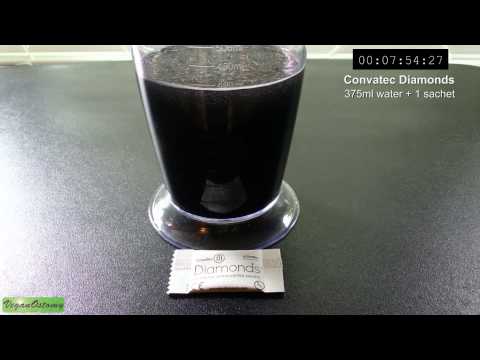
These can come in tablets, powder, capsules (usually made with animal ingredients) or sachets, but they all work in a very similar fashion: Add the gelling product to your pouch as directed and it will thicken up when it comes in contact with your output.
Here’s a demo of how gelling products work:
By playing the above video you agree to YouTube's Terms and Conditions and Privacy Policy
I’ve reviewed the ConvaTec Diamonds sachets, but I’ve also tried other products and they generally work well. You should be able to get samples to try.
Anti-Diarrheal Medication
Many ostomates will be told by their doctor or stoma nurse to take a product like Imodium to slow down their output. I would personally try this last if all other options failed, however, if you have a very high-output stoma which is causing ongoing nutritional problems or dehydration, this might be an option you’ll want to try until things get stabilized.
Fibre Supplements
This is not an option I’d recommend, nor is it something that your doctor is likely to recommend either. There are fibre supplements which can bulk up stool but they carry a risk of causing a bowel obstruction too. Do not try this unless explicitly told by your doctor.
Guar Gum
Guar gum is made from guar beans, but it’s been used as a thickening agent in various products for quite some time. There are claims that it has eight times the water-thickening effect compared to cornstarch, which is pretty impressive!
As a supplement, this often comes in tablets, but you should consult with your doctor to see if it’s a good option for you. Like fibre supplements, there’s a risk of slowing things down too much.
Consider Using a High-Output Appliance
If you find that your liquid output is difficult to manage when you’re wearing a traditional ostomy pouch, consider a high-output appliance.
These styles of pouches have larger capacities and are designed to better manage liquid output.

The product in the photo above is one of Coloplast’s high-output appliances. I did an overview of them HERE, and it may be an option worth considering.
Closing Thoughts
Some ostomates don’t mind liquid or loose output.
But if you’re one of the people who find liquid output to be problematic, then I hope the suggestions listed will come in handy.
In addition to the tips included above, you may also want to try using barrier rings or moldable wafers to help prevent liquid output from leaking under your appliance.
QUESTION: What do you do to thicken your output?


I went to my doctor yesterday, I told him that on the regular I HAVE to take 10 imodium a day and I try to drink metamucil every 2 to 4 hours. Food usually comes out within 20 min to an hour, I’ve learned to take the imodium after the metamucil because I’ve had them come out whole. So he prescribed me a medicine to take with the imodium to help slow it down, but it’s a scheduled drug, I was supposed to to get this reversed, but they are thinking that my crohns is affecting me still. Thank you for your guidance, I appreciate it.
i have an ileostomy and sometimes if i consume something it becomes uncontrolable, watery anf the bags dont stick…its a nightmare
That can certainly be frustrating, Guy. I do still recommend gelling products inside of the bag if diet doesn’t help. Good luck.
@veganostomy May I know where can I get the Trio Pearls in Toronto. My supplier only carry that diamond one (TR105). I hesitate to buy because I worry the color (black) may mislead me. Thanks in advance.
Trio is hard to get in Canada, but there are other alternatives like THIS.
The Diamond sachets are quite good, and the black color is charcoal, which can help reduce odors. The color is quite noticeable in your output, so if that causes concern then go with a clear product.
Another way to thicken the output is by using metamucil powder. My doctor recommended that I try it and it’s actually done a good job. The best part is that it has even cut down the odor from the ostomy bag so I don’t really use pouch deodorant and much anymore.
Hi Gurwinder. To clarify, do you take the metamucil powder as directed or are you putting it in the bag to absorb water?
I use it as directed by mixing a couple to teaspoons in water and drinking it. At first I thought it might remove too much water from my system, but after using it, I don’t feel like its removing much water at all.
@singh-gurwinder2 I wonder how it might work to place a little Metamucil inside the pouch, instead of those gelling packets. Inexpensive, for sure. Just a thought.
In regard to thickening your output try keeping a bag of large marsh mellows around and eat 2-3
which results in formed stools. Got the tip from a young girl on an colonostomy forum…it worked.
If your are having sugar problems, high sugar levels, marshmallows, Gatorade, drinks not helpful at all, everything for recommended from the iliostomy doctor is not recommended by the diabetes doctor. We are between a rock and a hard place
Hi Sharon. I can definitely see the challenge there. Have you been able to find alternatives? Perhaps something over the counter that doesn’t contain sugar?
Great work im new to all of this im actually still in the hospital and i keep leaking under the wafer because of liquid output😭
I hope that you’ll be out soon, Kenyatte! Good luck with everything.
@Kenyatte NallsYou may be experiencing leaks right now because the area of your stoma may still be swollen. It usually takes about eight weeks for the swelling to go down. Has your stoma nurse given you a barrier ring to put on under the barrier? That might help to slow down or stop the leaks. Stella
Eakin ring