

Ahhh, colon prep! When I had a colon, this use to be something I did not enjoy doing (does anyone??), but it was a necessary part of making sure that I was properly cleaned out before my GI could scope me.
Since frequent colonoscopies come with having IBD or any other GI disorder, it’s important to know just how to do prep right; failing to properly prep for a scope could mean that your doctor won’t be able to get a good look, and may even reschedule you for another!
Disclaimer: Always follow your doctor’s instructions when it comes to colon prep. Also, if you have other health problems (like diabetes), you should let your doctor know before doing the prep.
Table of Contents
What is a Colonoscopy?
A colonoscopy is a test that allows a doctor (usually our GI) to explore your large intestine using a tiny camera mounted to the end of a flexible tube. This tube is called an endoscope, although I’ve also seen it referred to as a colonoscope.
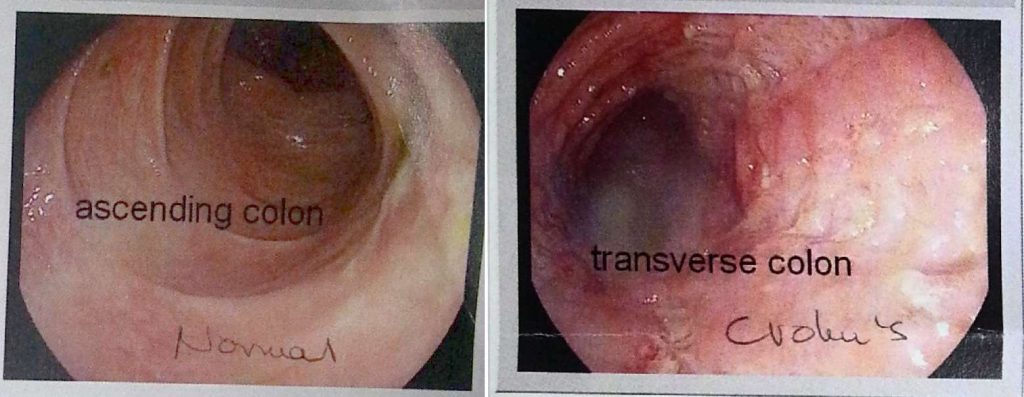
Alternatively, your doctor may do a sigmoidoscopy, which only examines the last part of your bowel (the sigmoid colon and rectum).
Colonoscopies are often done as a preventative measure to catch polyps before they turn cancerous. In the case of IBD, colonoscopies are used to confirm a diagnosis and see the extent of inflammation in the gut.
Keep in mind that colonoscopies are only used to explore the large intestine and they can’t reach the small bowel. For upper GI tests, including the stomach and small intestine, an upper endoscopy needs to be done instead, or in addition to, a colonoscopy.
Colonoscopies are usually done in less than 30 minutes, although the prep often requires several days at least.
Food, Where Art Thou?
This step is approx. 2-3 days before the scope
Food restrictions a few days before your scope should be expected (although not easily accepted!). Keep in mind that your doctor will likely (should!) be giving you instructions on what you can/can’t eat and when to start restricting certain foods.
Of course, not all instructions are the same, and I’ve received different instructions from different doctors in the years I was having regular scopes.
Food You’ll Likely Be Asked to Avoid
- Whole nuts and seeds.
- Raw fruits and vegetables (especially kiwi! I know from experience!)
- Popcorn/corn in general.
- Beans/legumes
- Whole grain/whole wheat grains.
- Mushrooms.

Food You CAN Eat During This Phase
- Tofu
- Smooth nut butter.
- Refined grain products (cereal, crackers, bread, pasta, oatmeal, white rice, etc.)
- Canned fruits and vegetables (canned peaches, canned carrots, etc.)
- Applesauce.
- Mock meats tend to be safe but avoid any that have thick “skins”.
- Potatoes (skinned).
- Vegetable juices and fruit juice without pulp.
- Smoothies (avoid adding fruit with tiny seeds).
- Most liquids like soft drinks, coffee, tea, sports drinks, etc.
Note: Some doctors may want you to avoid those foods as early as a week before your procedure.
Don’t Forget the Meds!
This step is usually required approx. 1-7+ days before your scope.
If you’re taking any medication or supplements, you may need to stop taking these several days to a week or more before your scope!
Some of the stuff I was asked to stop taking before my procedure:
- Iron supplements.
- Fiber supplements.
- Multivitamins.
I would always recommend letting your physician know what medications you’re taking since there may be some that can’t be discontinued quickly (i.e. prednisone).
The Liquid Fast
This step usually starts 24 hours before the scope,
About a day before your scope, you’ll be asked to go on a clear liquid-only diet to make it easier for the prep to do its thing.
These Drinks Should be Fine
- Water (obviously!) but don’t rely only on tap water as it contains a low amount of electrolytes.
- Tea
- Clear broth.
- Sports drinks (not colored red!).
- Soft Drinks / Pop (stuff like ginger ale, Sprite, 7-UP, carbonated water, etc.).
- Electrolyte drinks that aren’t colored (Pedialyte, Drip Drop, etc.)
- Coconut water (NOT coconut milk).
These Drinks Should NOT Be Consumed
- Drinks colored red, purple, orange, or blue. (most common colors to avoid).
- Milk (dairy or non-dairy).
- Coffee with cream/milk (usually black coffee is allowed).
- Alcohol (mostly because it dehydrates you).
I tend to stick to vegetable broth and sports drinks, as they help replace lost electrolytes; the sugar in the sports drinks also help with the calorie loss, which can be really important if you’re already underweight.
The Prep
This step often starts less than 12 hours before the scope depending on products used).
Your doctor will recommend a purgative, laxative, and perhaps even a stool softener to help purge your system the night/morning before your procedure.
There are many brands and types of purgatives, but I really prefer PICO-SALAX, which not only tastes great, but it’s easy to take. The cranberry flavored Pico-Salax is also free of animal ingredients, so it’s an obvious choice for me (many products contain at least lactose, so double-check the ingredients if you wish to avoid it).

Tip: If you are outside of Canada, you may not be able to find Pico-Salax. Go with Prepopik, which made is made by the same company, but under a different brand name.
Since there are so many different types of products used for the actual prep, it’s important to follow the instructions for the products given to you; I can’t cover everything in this article, and their use may differ slightly.
If you have questions about the products you’re taking, please speak to your doctor.
As the prep works and there seems to be no end to the amount of liquid your body is passing through it, you should notice that liquid coming out of you is becoming clearer. By the end of your prep, your liquid stools should look more like pee, but don’t be alarmed if it’s still a little cloudy.
Tips for Getting Through Your Prep
- Plan to stay home while the prep does it’s magic because you’ll want to be close to a toilet at all times.
- Don’t ignore those electrolytes (sodium and potassium). Make sure you’re replacing them through the liquids you’re consuming.
- You may feel dizzy and weak due to the combination of fasting and losing so much fluid through the day. Keep on top of your fluid intake, and consume sugary drinks to replace those lost calories.
- Try to relax during the prep. There’s no need to start a building project while your system purges, so throw on a few good movies and relax.
- Get the best toilet paper you can. If that means buying 3-play, luxury toilet paper, then do it! Your ass will thank you!
- Your butt may still get sore. Depending on the shape of your butt hole, going to the bathroom more often because of the prep may cause “butt burn”. A bidet, showers, and/or zinc ointment may help with this.
The Scope
Before You Arrive
You’ll be asked to stop drinking liquids about 2 hours before your procedure, but this may also depend on your prep schedule and when your scope takes place.
Be sure to have someone available who can drive you back home after the scope, since your doctor likely won’t let you drive for about 24 hours (if anesthesia was used).
By the time you are at your clinic/hospital, your urgency should be subsided and you won’t feel as if you need to live in the bathroom. Of course, if you’re going into the scope with active disease then this may not be a realistic expectation so let your nurses know that you may still need to use the bathroom.
When You Arrive
You’ll be asked to change into a hospital gown, and you may be asked to sit in a waiting room or be placed on a hospital stretcher until your doctor is ready.
Most people are put under during their scope, although you may be given the option to stay awake. I’d suggest being put under, as the procedure is quite uncomfortable as you get pumped with air to expand your insides.
After Your Scope
When you doctor is done having a look, you’ll be put in another room while you come out of your anesthesia. This will also be the place where you (along with other patients) will be “degassing” as the air that was pumped into you comes out. Don’t worry, though, these farts won’t smell as there’s nothing really in your gut that puts off odor at this point.
Passing gas will also help to relieve any discomfort, so don’t be modest and let them loose!
Once you’re feeling up to it, you can have a follow-up with your doctor to go over the results of the scope. If this colonoscopy was simply routine, then you may not need this extra appointment and your doctor’s office will call if they need you to come in.
You will be allowed to eat after your scope, but take it easy for the day – keep meals small until the next day.
Conclusion
Hopefully, you won’t have to do too many of these, but if you do, I hope the results are always positive.
Getting a scope isn’t a big deal, and if you go into it expecting to be tortured, then you likely won’t have a good experience.
As always, please discuss your concerns with your doctor so that you can be more prepared for what to expect.
Info: If you’d like to know what my experience is with an ileoscopy (through the stoma), then have a look at THIS article.
Question: Do you have any colonoscopy tips to share?


What do you think about plant based butters made from either coconut oil or some are from cashew milk products?
I’m not sure I’ve tried those products specifically, but vegan margarine has been no problem for me. I have used nut butters that are similar to peanut butter, but those should be avoided within 24h of the colonoscopy. I’d personally avoid almond nut butter too close to the test date because the almond skins tend to be incorporated in the nut butter and they are often hard to flush out.
Hey Jessica, since the time you posted this I’ve been able to try the “Nutiva Coconut Oil with non-dairy butter flavor" (amazon link: https://amzn.to/2I1wkCB ) which is a vegan product. My goodness is it ever great! We’ve been using it on everything! LOL
@veganostomy
Have you sent Jessica the grocery bill LOL
Thanks for explaining what kind of food we should avoid when preparing for a colonoscopy. My dad is thinking about getting a colonoscopy to see if anything is wrong. Making sure that it is done by a professional could be really nice.
Just wanted to say thanks. I’m not vegan, but wanted to continue to eat healthy during my first colonoscopy prep. Thanks for the suggestions and also for being willing to talk about a subject I haven’t heard anyone else discuss. You’ve calmed my nerves a bit.
Glad the information helped, Ann!
I’m due for a colonscopy in just over a week. For breakfast I usually have old-fashioned rolled oats, with quinoa and chopped prunes. I phoned the doctor’s office, and the receptionist said the oats and prunes were fine but not the quinoa. Do you agree with that?
Definitely not quinoa! It’s not known to digest well and is considered “high residue" as far as getting cleaned out goes. If you can substitute it for couscous, that would be better. Good luck !
You provided a fantastic service with all this info. Thank you. My colonoscopy brochure provided almost no useful info. You’re the best!